Can you paint over wallpaper? Yes, but we usually advise against it, and Wilmington’s humidity is one of the reasons. It holds up only when the paper is tightly bonded, smooth and sealed with the right primer, and many walls in Wilmington homes don’t meet that test. We hang wallpaper and paint interiors from our office on Judges Road, so we see both outcomes: paper that took paint fine and walls where the seams lifted later. This guide covers how to check your wall, why paint fails on old paper, the steps if you go ahead, and what to look for in neighborhoods from Carolina Place to Landfall.
When Painting Over Wallpaper Can Work
Painting over wallpaper is a short-term fix for a specific kind of wall. Before you buy anything, walk the room in daylight and press on the seams and corners with your fingers. The paper will tell you most of what you need to know. In a Wilmington house, start with the bathrooms, the laundry room and any wall near a past leak.
| What to check | Paint may work | Take it down first |
|---|---|---|
| Bond | Tight everywhere | Lifting at seams, corners or edges |
| Surface | Smooth, flat paper | Textured or embossed paper |
| Material | Paper with a porous face | Vinyl or vinyl-coated paper |
| Room | Dry room with steady airflow | Full bath or any room with moisture stains |
| Plan | A few years, then a full redo | The long-term finish for the room |
One failed line in that table is usually enough to change our answer. A single lifting seam can sometimes be pasted back down, but several across a room usually mean the adhesive is giving up. Paint won’t fix that, and the moisture in it can make things worse.
Why Paint Fails on Old Wallpaper
Old wallpaper is held up by water-activated paste, and most interior paint is water-based. Behr warns that water-based paint or primer can reactivate the glue and cause peeling. That’s how a wall that looked sound on Saturday ends up with bubbles by Sunday.
Three other problems show up after the paint dries:
- Seams telegraph. Paper edges read as faint vertical lines, especially on a satin or semi-gloss finish with raking light from a window.
- Texture stays. Embossed patterns show through, and Behr recommends removing textured paper instead of painting it.
- Vinyl resists paint. The slick surface doesn’t take paint well, so the finish is more likely to fail.
There’s also a cost that arrives later. Paint and sealing primer block water from reaching the paste, which makes painted paper harder to take down when the finish eventually fails. The shortcut can turn a future repaint into a bigger prep job.
How to Paint Over Wallpaper If You Decide to Do It
If your wall passes the checks above and you only need a few good years, prep decides whether the job lasts. These steps follow Behr’s guidance.
- Clean the paper. Wash off dirt and residue with mild soap and water, without soaking it, then let it dry fully. Treat any mildew before you go further.
- Fix the seams. Paste loose edges flat. Apply drywall mud over the seams, let it dry and sand smooth.
- Remove the dust. Wipe with a damp cloth and let the wall dry completely.
- Seal with an oil-based primer. This is the step that matters most, because it keeps water away from the paste underneath.
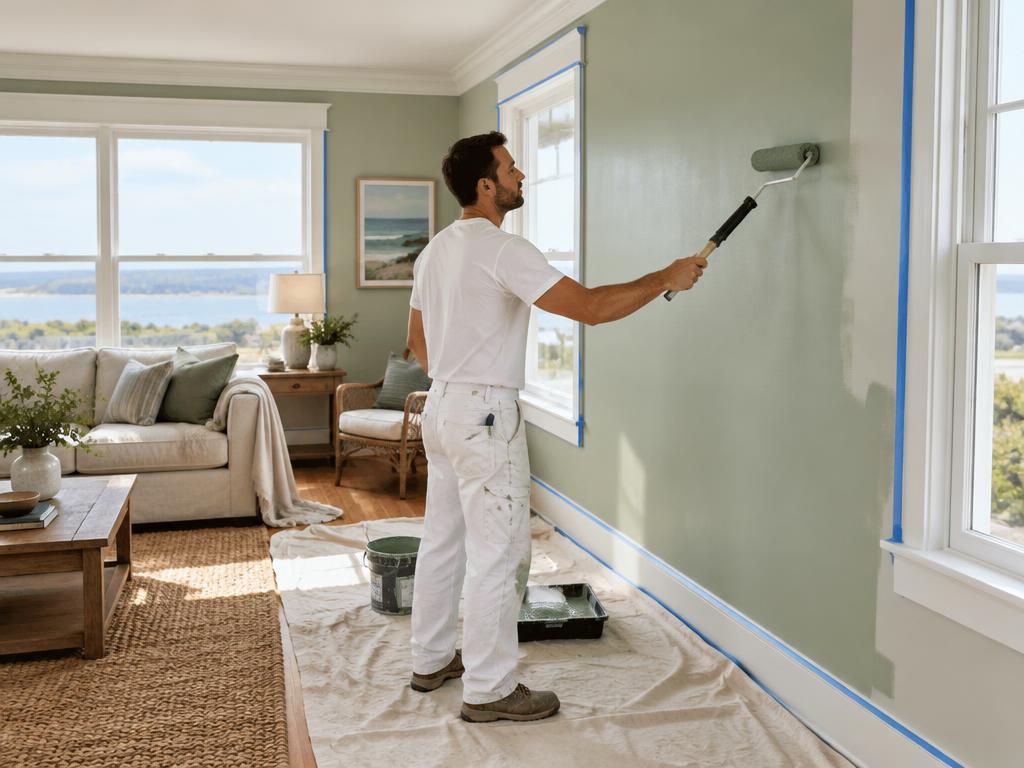
- Paint in two coats. Cut in the edges, then roll in small sections and keep a wet edge. A flat or matte sheen will hide seam lines better than a higher sheen.
If your house was built before 1978, stop before step 2. There may be lead paint beneath the paper, and federal Renovate Right guidance warns against dry scraping and unprotected sanding because they create lead dust. That covers the original homes in Wilmington neighborhoods like Carolina Place, Carolina Heights and Forest Hills. Test first, or assume lead is present and bring in a lead-safe certified contractor.
Is There Wallpaper You Can Paint Over?
Yes. Paintable wallpaper is made for it, usually with a textured or embossed face and a surface designed to accept paint. It’s sold in beadboard, tin-tile and other relief patterns, so the texture is the point of the product.
That makes it a different job from painting a floral someone hung decades ago. Texture that would be a flaw on old paper is the finish here. If your existing wall has it and the paper is tight, a fresh coat is a reasonable call. Check the maker’s instructions for the primer and sheen they recommend, since they vary by product.
If you’re not sure what’s on the wall, look at a loose corner. A plastic-feeling face that peels away from a paper backing is likely vinyl, and our guide to vinyl wallcovering explains why it behaves so differently from printed paper.
Painting Over Wallpaper in a Wilmington Home
Humidity is the main reason we’re cautious here. The National Weather Service puts Wilmington’s average relative humidity at 74% for the year, rising to 78% in July and 80% in August. Weather Spark counts nearly every July day as muggy, and the city averages about 60 inches of rain a year. Any moisture that gets behind the paper or softens the paste shows up first at seams and edges.
Storm history matters too. Hurricane Florence dropped 23.02 inches on Wilmington in September 2018, in a year that ended with a record 102.40 inches. If a papered wall took on water in Florence or a later storm, or shows stains now, find out why before you paint. Primer can hide a stain, but it won’t dry out a wall.
What to Check by Wilmington Neighborhood
The right call also depends on the age of the house. Here’s where we’d start in some of the neighborhoods around town.
| Wilmington area | When homes were built | Check first |
|---|---|---|
| Carolina Place | Mostly 1906 to World War II | Lead risk, plus older wall surfaces and repairs under the paper |
| Carolina Heights | About 1908 to 1950 | Lead risk, plaster and several generations of finishes |
| Sunset Park | 1910s to 1960s | Lead risk, with wall types that vary between early and postwar houses |
| Forest Hills | Mid-1930s and 1940s | Lead risk, plus how many layers are already on the wall |
| Landfall | Construction began in 1986 | Usually past the lead-paint era, but drywall can tear if paper was hung without sizing or primer |
Downtown Wilmington’s historic district has some of the oldest homes in the city, so treat any papered wall there as a test-first job. The same caution about humidity applies to our interior painting in Carolina Beach and our interior painting in Southport, where salt air gives you even less room for error. We look hard at bond and airflow before we’d agree to paint over paper in any of these houses.
Trying to decide what to do with an old papered room in your Wilmington home? Call Intracoastal Wallcovering at (910) 679-9794, or send us photos of the room. Your estimate comes back right away, and we’ll tell you plainly whether the paper is worth painting.
What We Usually Recommend Instead
For most rooms, we’d rather give you a wall that doesn’t need a second look. Our usual approach is to take the old paper down, repair the surface and then paint. Our crew for interior painting in Wilmington fills, sands and spot-primes before any color goes on, which gives the finish something sound to grip.
The trade-off is that nobody can see the wall until the paper is off. That’s the one real unknown on these jobs, so we explain how we’ll handle it before you approve the estimate. Our painters are employees, we carry $2 million in general liability plus workers’ comp, and the quote we give you is the quote we honor.
If you’d like new paper on one wall instead of paint, our crew for wallpaper installation in Wilmington runs on the same schedule as the painters. Paint finishes first, the paper goes up after, and you deal with one office from estimate to walkthrough.
Frequently Asked Questions
Is it safe to paint over wallpaper in an older Wilmington home?
It depends on what’s under the paper. Homes built before 1978, including the original houses in Carolina Place, Carolina Heights and Forest Hills, may have lead paint, so test before you scrape or sand. Priming and painting tight paper disturbs less, but loose seams need repair first.
Can you paint over vinyl wallpaper?
We don’t recommend it. Vinyl has a slick surface that doesn’t take paint well, and the finish is more likely to peel. If the vinyl layer peels off cleanly, it may leave a paper backing behind, and that backing still needs to be dealt with before paint.
What is the cheapest way to cover up wallpaper?
Paint is usually the lowest upfront cost, as long as the paper is tight and smooth. It can cost more later if seams lift or the painted paper has to come off. Compare the cost of doing it once against the cost of doing it twice.
Can you put wallpaper on a freshly painted wall?
Yes, once the paint has fully cured and the wall has been prepared for paper. Check the paint can for cure time. On jobs with both trades, we finish the paint first and tell the crew which walls to leave for the paper.
Can you put wallpaper over old wallpaper?
We don’t advise it. Paste from the new layer can loosen the old one, and old seams can show through the new paper. The same moisture risk applies if you’re thinking about wallpaper in a bathroom, where a sound wall matters even more.
The Bottom Line
So, can you paint over wallpaper in Wilmington? Yes, if the paper is tight, smooth and in a dry room, and if you seal it with an oil-based primer and accept that it’s a temporary fix. For loose seams, vinyl, texture or a damp room, taking the paper down will usually give you a better result, and in a city this humid, a finish you won’t have to redo.
Call Intracoastal Wallcovering at (910) 679-9794 or request your estimate and tell us about the room. We work from Judges Road in Wilmington, serving homes from Carolina Place and Sunset Park to Landfall, along with the rest of New Hanover County and Pender, Brunswick and Onslow counties. Military households get 10% off.